
Introduction: How Much Does a Hydraulic Breaker Cost?
The hydraulic breaker price depends on several factors, including excavator size, impact energy, hydraulic performance, manufacturing quality, configuration, and order quantity. Shipping costs, spare parts, and after-sales service can also affect your total investment.
In general, a new hydraulic breaker may cost from under $1,000 for some compact or economy models to more than $100,000 for specialized, heavy-duty breakers. Actual prices vary considerably by manufacturer, model, market, and purchasing terms.
This guide explains typical hydraulic breaker price ranges, the factors that influence costs, and how to choose a reliable supplier for your business.
1. Hydraulic Breaker Price by Excavator Size
One of the biggest factors affecting hydraulic breaker cost is the size of the carrier machine. Small excavators generally need lighter breakers, while larger machines require attachments built for higher impact energy and more demanding applications.
The following table provides indicative budget ranges for new hydraulic breakers. These figures are general market estimates, not guaranteed factory quotations.
| Hydraulic Breaker Type | Typical Carrier Size | Indicative Price Range (USD) | Common Applications |
|---|---|---|---|
| Mini Hydraulic Breaker | 1–5 ton excavator | $750–$8,000 | Landscaping, small demolition, residential construction |
| Medium Hydraulic Breaker | 6–15 ton excavator | $4,000–$20,000 | Road maintenance, trenching, concrete breaking |
| Heavy-Duty Hydraulic Breaker | 20+ ton excavator | $15,000–$100,000+ | Quarrying, large-scale demolition, rock breaking |
These price ranges overlap because hydraulic breaker specifications, brand positioning, manufacturing standards, and sales channels differ. Heavy-duty or specialized models may exceed the upper range shown.
For importers and distributors, obtaining a model-specific quotation directly from a manufacturer is the best way to establish a realistic purchasing budget.
Hydraulic Breaker for Mini Excavators
A mini excavator hydraulic breaker is designed for compact machines operating in restricted spaces. It is commonly used for landscaping, utility installation, road repairs, and small demolition projects.
When comparing a hydraulic hammer for a mini excavator, buyers should check the attachment weight, hydraulic flow requirements, operating pressure, and mounting dimensions.
A lower purchase price can be attractive, but the breaker must be compatible with the carrier machine to deliver reliable performance.
Hydraulic Breaker for Medium Excavators
Medium-sized hydraulic breakers are commonly used by contractors handling general construction, concrete demolition, trenching, and roadwork.
In this category, buyers should pay particular attention to impact performance, operating efficiency, wear-part availability, and durability under frequent use.
For equipment dealers and wholesalers, sourcing several suitable models from one manufacturer may also help simplify procurement and spare-parts management.
Heavy-Duty Hydraulic Breakers
Heavy-duty hydraulic breakers are designed for demanding applications such as quarrying, hard-rock breaking, and large demolition projects.
Their higher purchase prices generally reflect more demanding performance requirements, larger components, and specialized configurations.
For these applications, buyers should evaluate not only the initial price but also maintenance requirements, service support, and the expected cost of operating the attachment over its service life.
2. What Factors Affect Hydraulic Breaker Price?
Understanding the main cost factors helps buyers compare quotations fairly and avoid purchasing an attachment that does not suit their needs.
2.1 Excavator Weight and Breaker Size
The breaker must be matched to the operating weight and lifting capacity of the carrier machine.
A breaker that is too heavy may affect machine stability and put additional stress on the boom and arm. An undersized breaker may not deliver the productivity required for the intended job.
Before requesting a quotation, provide the excavator make, model, and operating weight to your supplier.
2.2 Hydraulic Flow and Operating Pressure
Hydraulic breakers rely on the carrier machine’s hydraulic system. The required oil flow and operating pressure vary by breaker model.
Incorrect matching can reduce performance, increase heat generation, and cause premature wear or equipment damage.
Always compare the manufacturer’s specified flow and pressure requirements with the excavator’s available auxiliary hydraulic output.
2.3 Manufacturing Quality and Internal Components
Manufacturing quality has a direct influence on product cost and long-term reliability.
Important considerations include material quality, piston machining, cylinder tolerances, sealing systems, and the durability of wear components.
A low-cost breaker is not necessarily the most economical choice if it requires frequent repairs or causes substantial downtime. Buyers should compare specifications, quality control, warranty conditions, and replacement-part availability alongside the purchase price.
2.4 Hydraulic Breaker Design and Configuration
Different jobs require different breaker configurations.
Common options include:
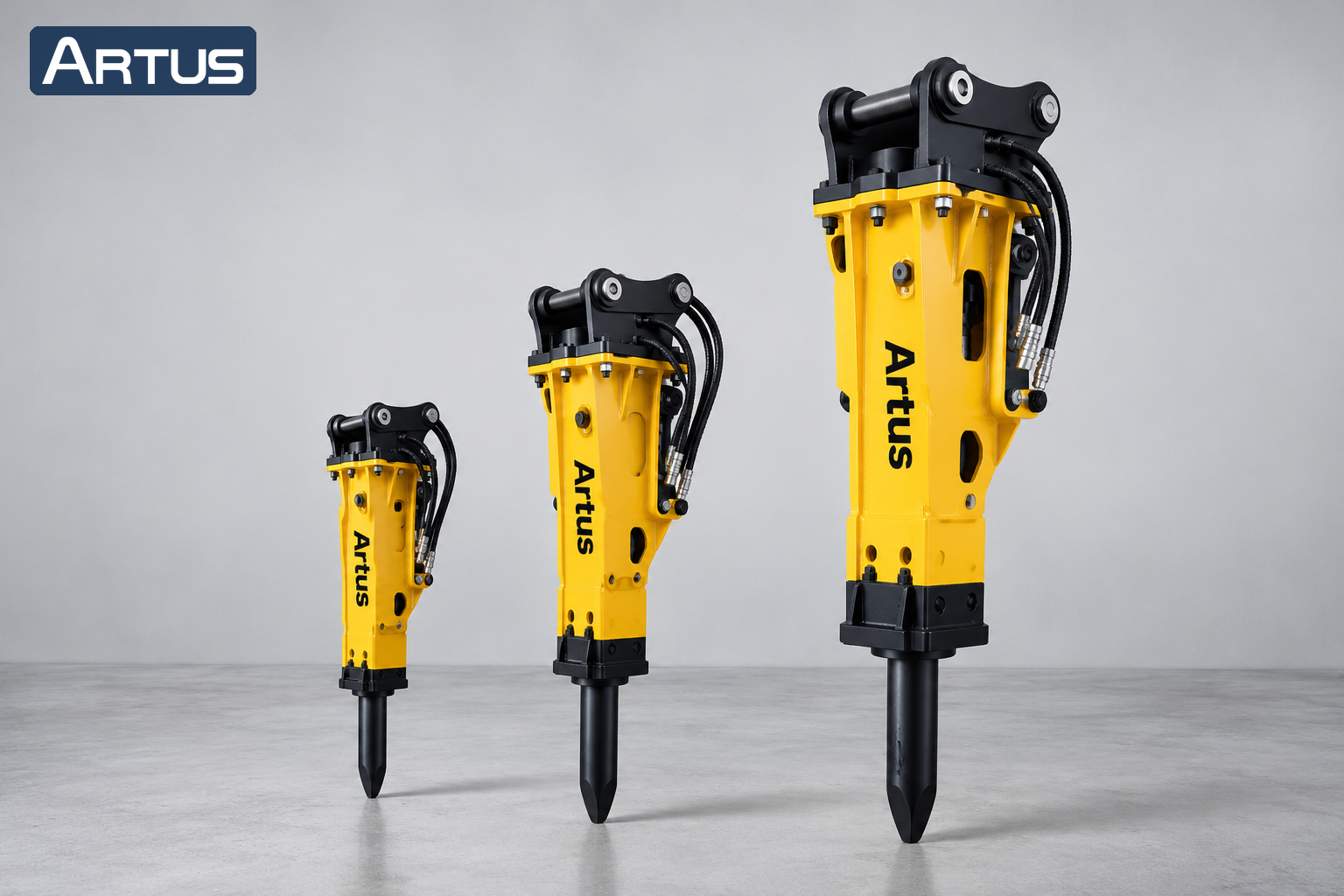
- Side-type hydraulic breakers: Often selected for general construction and demolition applications.
- Box-type hydraulic breakers: Commonly chosen when noise control and enclosure protection are priorities.
- Top-type hydraulic breakers: Used in various applications where their structure and mounting arrangement suit the carrier and working conditions.
The final price may also depend on the mounting bracket, quick coupler compatibility, working tool, hose kit, and other accessories included in the order.
Buyers should confirm the complete scope of supply before comparing quotations.
2.5 Brand, Order Quantity, and Customization
Brand positioning, manufacturing standards, and after-sales support can create substantial price differences between suppliers.
Order quantity can also affect the unit price. Wholesale orders may qualify for different commercial terms from single-unit purchases, depending on the manufacturer and product configuration.
If you are an importer, distributor, or equipment dealer, ask about volume pricing, spare-parts packages, private labeling, and OEM or ODM services when available.
3. Factory Price vs. Total Import Cost
For international buyers, the quoted hydraulic breaker price is only one part of the total purchasing cost.
When sourcing from overseas manufacturers, clarify the quotation basis and identify which expenses are included.
What Should You Check in a Hydraulic Breaker Quotation?
Product price: Confirm the exact model, specifications, and quantity.
Accessories: Check whether the mounting bracket, hoses, working tool, and installation components are included.
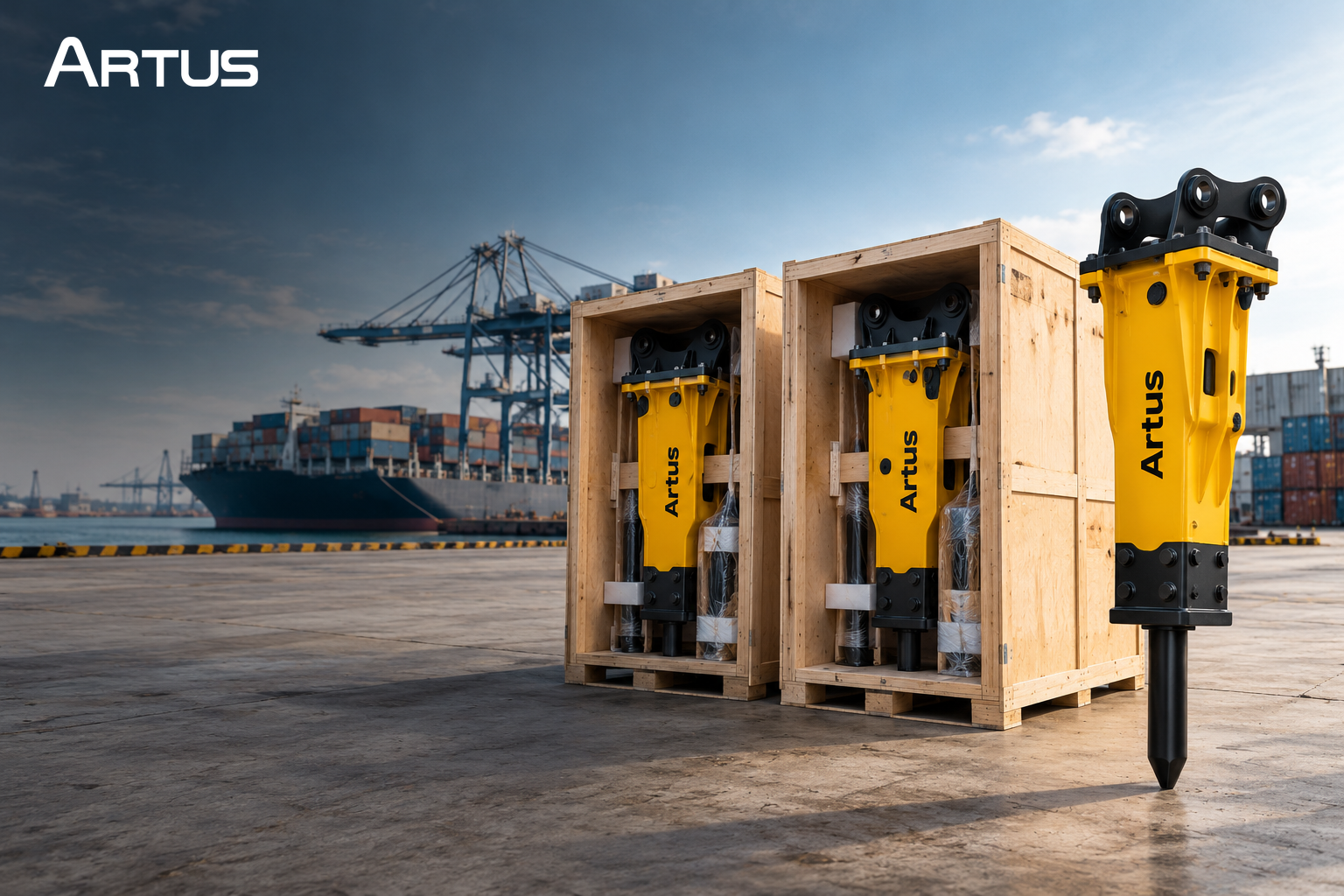
Packaging: Confirm whether export packaging or a wooden crate is included in the price.
Shipping and insurance: Determine whether these charges are included or quoted separately.
Import duties and taxes: Check the applicable costs in your destination country.
Spare parts and warranty: Ask about recommended wear parts, warranty coverage, and the process for obtaining technical support.
Understanding EXW, FOB, and CIF Pricing
International suppliers may quote using different Incoterms, which affect the allocation of costs and responsibilities.
- EXW (Ex Works): The seller makes the goods available at the agreed location, with the buyer generally responsible for arranging collection and subsequent transport.
- FOB (Free On Board): For applicable sea or inland waterway transport, the seller delivers the goods on board the nominated vessel at the agreed port, subject to the agreed Incoterms rules.
- CIF (Cost, Insurance and Freight): For applicable sea or inland waterway transport, the seller arranges the cost of transport and insurance to the named destination port, while risk transfers under the rule when the goods are on board the vessel at the port of shipment.
Always confirm the named place or port and the applicable Incoterms version. Compare quotations using the same commercial basis to avoid misleading price comparisons.
4. How to Choose a Cost-Effective Hydraulic Breaker
The best hydraulic breaker is not necessarily the cheapest or the largest model. It is the attachment that meets your operating requirements at an appropriate total cost.
Before making a purchasing decision, consider the following points.
Match the breaker to your excavator. Check carrier weight, hydraulic flow, operating pressure, lifting capacity, and mounting dimensions.
Identify the working conditions. Concrete demolition, trenching, roadwork, and hard-rock breaking can require different tool configurations and performance characteristics.
Compare complete specifications. Look beyond product weight and chisel diameter. Review the required hydraulic parameters, impact performance, included accessories, and permitted carrier range.
Evaluate spare-parts availability. Chisels, bushings, seals, and other wear parts can influence long-term operating costs.
Check the supplier’s technical support. Ask whether the manufacturer can provide compatibility guidance, operating instructions, maintenance recommendations, and assistance with replacement parts.
Request a detailed quotation. Ensure the price, specifications, delivery terms, payment conditions, warranty, and scope of supply are clearly stated.
Following these steps helps reduce compatibility issues and makes it easier to compare suppliers on an equivalent basis.
5. Why Consider Buying Hydraulic Breakers Directly from a Manufacturer?
For international distributors, wholesalers, and fleet operators, purchasing directly from a hydraulic breaker manufacturer may offer a practical route to sourcing equipment and replacement parts.
Depending on the supplier, potential advantages may include:
- Direct quotation: Obtain pricing based on your required model, quantity, and configuration.
- Technical selection support: Confirm compatibility with your excavator before placing an order.
- Bulk purchasing options: Discuss commercial terms for recurring orders or distribution needs.
- Customization options: Explore suitable branding, mounting arrangements, and accessories where supported.
- Spare-parts coordination: Plan for common wear parts and future maintenance requirements.
However, direct purchasing does not automatically guarantee the lowest total cost. Buyers should also assess manufacturing quality, production consistency, communication, delivery arrangements, and after-sales support.
A dependable supplier should provide clear technical information and a quotation that allows you to understand exactly what you are purchasing.
6. Frequently Asked Questions About Hydraulic Breaker Price
How much does a hydraulic breaker cost?
A hydraulic breaker may cost from under $1,000 for some small, economy models to over $100,000 for specialized heavy-duty equipment. The actual hydraulic breaker price depends on the model, carrier size, specifications, manufacturing quality, and purchasing conditions.
For an accurate price, request a quotation based on your excavator model and intended application.
How much is a hydraulic hammer for a mini excavator?
The price of a hydraulic hammer for a mini excavator varies according to its size, hydraulic requirements, configuration, and manufacturer. Public market estimates range from hundreds of dollars for some economy products to several thousand dollars for other models.
Always confirm machine compatibility, included accessories, warranty terms, and shipping costs before purchasing.
Is a cheaper hydraulic breaker worth buying?
A lower-priced breaker may suit occasional or less demanding work, provided it meets the application’s technical requirements. For intensive operation, buyers should consider wear-part costs, reliability, maintenance, and downtime alongside the initial purchase price.
The most economical choice is the one that provides suitable performance and a reasonable total cost over its working life.
Can I buy hydraulic breakers in bulk for distribution?
Many manufacturers offer quotations for wholesale and bulk orders, with commercial terms depending on order quantity, model selection, and customization requirements.
Importers and distributors should also ask about spare-parts availability, packaging, lead times, and ongoing technical support before establishing a supply arrangement.
Conclusion: Get a Hydraulic Breaker Price for Your Project
Choosing the right hydraulic breaker starts with understanding your machine, working conditions, and budget. Comparing price alone is not enough; specifications, compatibility, manufacturing quality, spare parts, and delivery terms all matter.
Whether you need a mini excavator hydraulic breaker, a medium-sized excavator hammer, or a heavy-duty breaker for demanding applications, a detailed quotation is the best starting point.
Looking for a hydraulic breaker supplier for your next purchase?
Contact our sales team with your excavator specifications, required quantity, application, and destination country. We will help you identify a suitable hydraulic breaker configuration and provide a quotation based on your requirements.